

2026 ASTC Roadshows
2026 Roadshow Presenters
What a fabulous line up we have for this year! Each presenter brings their experience, ideas, and enthusiasm to the conference to provide attendees with something new.
We thank them all for their time and effort!
Conference Links

Dave Gash
Dave's presentation is titled, Up With Markdown! Exploiting simple-syntax notation for rapid content creation.
Technical writers are often asked to quickly produce small (or not!)
sections of basic content for topics whose ultimate destination is an HTML page. Instead of using Word, Flare, or other large and complex authoring tools for quick writing tasks, we can harness the power of simplified-notation markdown to quickly and easily bang out content chunks that can be exported as HTML and seamlessly integrated into
virtually any parent document. It's fast, easy, and even kind of fun!
You will learn:
* What is markdown?
* How can it help me be more productive?
* How simple is simplified syntax?
* What editing tools are available?
Dave is a veteran software professional with decades of development, documentation, and training experience, and is happily retired after forty-seven years in the workforce. Dave is well known in the international tech pubs community as an engaging and enthusiastic technical instructor. In the Before Times, he was a frequent speaker at user assistance conferences in the US and around the world. Now he just lies about and cavalierly declines the occasional contract offer.

Tony's presentation is about, Darwin Information Typing Architecture (DITA) / information architecture.
DITA is an open XML-based standard for creating, structuring, and managing modular technical
documentation. Instead of writing long, single-file documents, DITA lets authors write small, reusable topic blocks—like tasks, concepts, or references—and assemble them using maps for multi-format publishing.
Tony is a prominent Australian technical communication expert, structured authoring consultant, and author of The DITA Style Guide: Best Practices for
Authors, based in Melbourne, Victoria. He is the founder of HyperWrite and an internationally recognised authority on DITA.
Tony boasts many professional accomplishments related to information architecture, such as:
-
Consultancy: Runs HyperWrite, providing specialised consulting and training in structured authoring, hypertext, and DITA implementation.
-
Standards Committees: Serves as a member of the OASIS DITA Technical
Committee and the DITA Adoption Technical Committee. -
Academia & Teaching: Has lectured in technical communication at
Swinburne University and authored digital training courses on DITA concepts
for international organisations like Firehead. -
Software Tools: Developed WinANT Echidna, an open-source Windows interface tool for the DITA Open Toolkit.
Tony Self

Roslyn Abela
Roslyn's presentation is titled, Tips for managing effective stakeholder sign-off.
Any technical writer who writes for a brand will need to obtain relevant stakeholder sign-off for the communications the writer develops. This presentation will provide tips on how to achieve effective sign-off, such as:
-
What stakeholder sign-off means and why it’s important
-
Types of feedback methods
-
What to consider when working with a cross-functional team
-
Tools and techniques.
The tips will be shown via case studies. One of the case studies is from Roslyn’s experience as a key plain language editor on the editorial team of the new international standard ISO 24896 Notation for Business Reporting, that was released on 11 June 2026.
Roslyn has more than 25 years’ experience as a Communications Manager, technical writer, editor and plain language specialist. With her passion for plain language, Roslyn contributes to the review of international standards about plain language.

Warren Lewington
Warren's presentation is about Microsoft Word automation.
Warren Lewington boasts over 20 years of Technical Writing experience, specialising in engineering of all types. He is skilled not only in professional documentation but in providing technical support and in management of projects and documentation departments. In his free time, he wins championships in kart racing!
Marie Alafaci
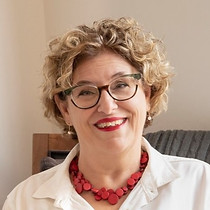
Marie's presentation is titled, You can write. So why is marketing putting your reader to sleep?
In this session, Marie explores the distinction between writing for comprehension and writing for action. She'll examine why the same information, presented in two different ways, can produce completely different results; why knowing your reader's emotional state matters as much as knowing their knowledge level; and what 'clear' actually means when the goal is to make someone choose you rather than simply understand you.
Marie will talk about:
-
The specific habits that distinguish technical writing from marketing copy…and when each is the right tool.
-
How to identify who you're actually writing for and what you want them to feel, not just understand.
-
A practical framework for deciding what to include and what to leave out without compromising accuracy.
-
Why simplicity in marketing copy is a strategic decision, not a compromise.
Marie Alafaci is an ASTC member and she's a marketing copywriter and podcaster who doesn’t do salesy. She’s all about clear copy, smart strategy and lasting impact.
Oh, and she’s a big fan of vintage illustrations, steam punk and ginger cats!

Tafline Ramos
Tafline's presentation is about Standards Australia.
This session will cover valuable information, such as:
-
Who Standards Australia is.
-
Why standards are important.
-
How standards influence professional practice.
-
How standards are developed, reviewed and maintained.
As Planit’s Global Practice Director of Quality Engineering (QE), Tafline is responsible for driving best practices in QE across Planit, including to thousands of consultants and hundreds of customers worldwide.
She has over 20 years of experience in the ICT industry as a quality and testing specialist. She has delivered large and complex programmes of work with teams of over 80 resources and specialises in uplifting QE lifecycle maturity across organisations. Tafline is also a part-time Professor of Practice at La Trobe University, teaching testing to the next generation of software engineers and testers.
Tafline is an international standards leader, developing QE, QA and testing standards with ISO and IEEE. She is chair of the Software and Systems Engineering Committee at Standards Australia (IT-015), representing Australia’s interests in international standards development with ISO/IEC JTC 1/SC 7.
Tafline holds a PhD in software testing and is a regular feature in quality engineering, software engineering and testing conferences.
Sandra Muller
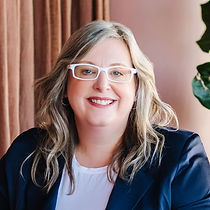
Sandra's presentation is about Trauma awareness in content design.
In this session, Sandra will presents a basic understanding of trauma, its impact and symptoms, and how we as technical writers, editors and content designers can write and design for a better and safer digital environment for our users.
This talk will cover:
-
Understanding trauma.
-
Window of tolerance.
-
Cognitive load.
-
Minimising distress and retraumatisation.
-
Trauma-aware principles of content practice.
-
Grief as trauma.
With more than 25 years’ experience in digital content, Sandra specialises in creating accessible, human-centred content for organisations operating in complex regulatory environments. As the head of True North Content, she leads a team of some of Australia’s best digital content strategists, content designers and plain-language writers and editors.
Some of her web and intranet clients include the Australian Passports Office, Department of Defence, Australian Federal Police, National Emergency Management Agency, Parliament House, ACT Government, NT Government, Australian Prudential Regulatory Authority, AUSTRAC, Australian Pharmacy Council, Actuaries Australia and Aspen Medical.

Swapnil Ogale
Swapnil's presentation is titled, It was never about the words: Technical Writing after AI.
Swapnil will talk about:
-
A way to respond to "just use AI" that surfaces the gap between how non-writers judge documentation and how writers judge it, rather than just pushing back or complying.
-
Language for naming the judgment work behind every draft, usable in performance reviews, job ads, and stakeholder conversations.
-
A clear-eyed view of where AI genuinely changes the job versus where it doesn't.
-
A case for why staying quiet about your value is now a career risk, not a neutral choice.
-
Evidence from other markets that this is a cycle, not a permanent devaluation, adjusted for where your own organisation sits in its AI journey.
Swapnil Ogale is currently a Senior Technical Writer at Amazon Web Services Australia, and has over 20 years of experience across product, API, and process documentation. He's spent much of that time making the case for the profession as much as practicing it: founding Write the Docs Australia in 2016, mentoring writers through ADPList, and speaking on documentation advocacy at multiple conferences.
He's also tracked the profession's tooling shifts firsthand, from the desktop tools, to help authoring, to docs-as-code transition, to the current AI moment. This talk sits at the intersection of both threads: what actually changes when the tools change, and why writers have to get better at explaining their own value before someone else defines it for them.
Outside work, he is an avid reader (you will always find a book everywhere he goes!), loves exploring food, culture, and travel, and is always trying to keep himself ready (mentally and physically) to play the next season of summer crick.